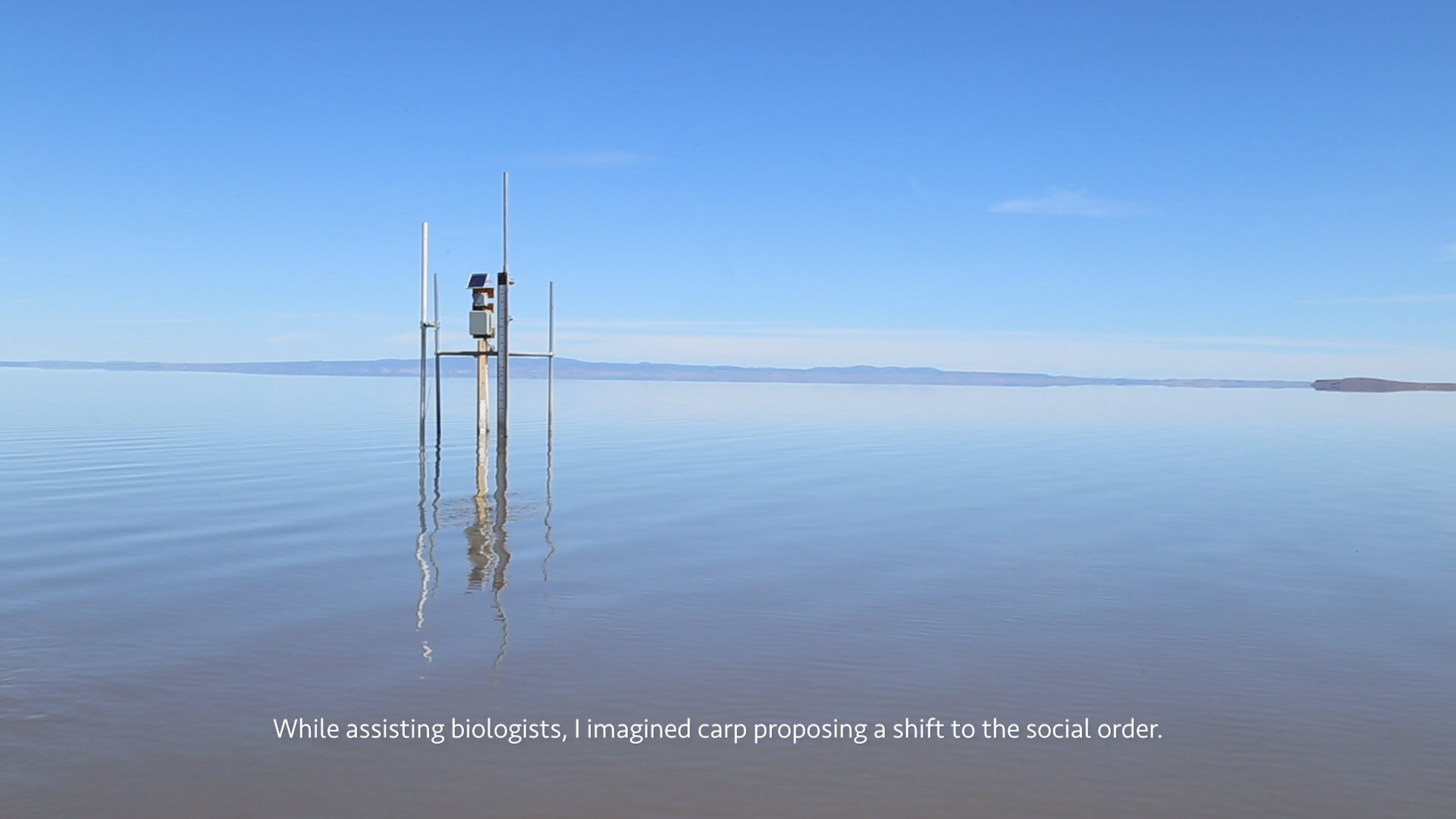
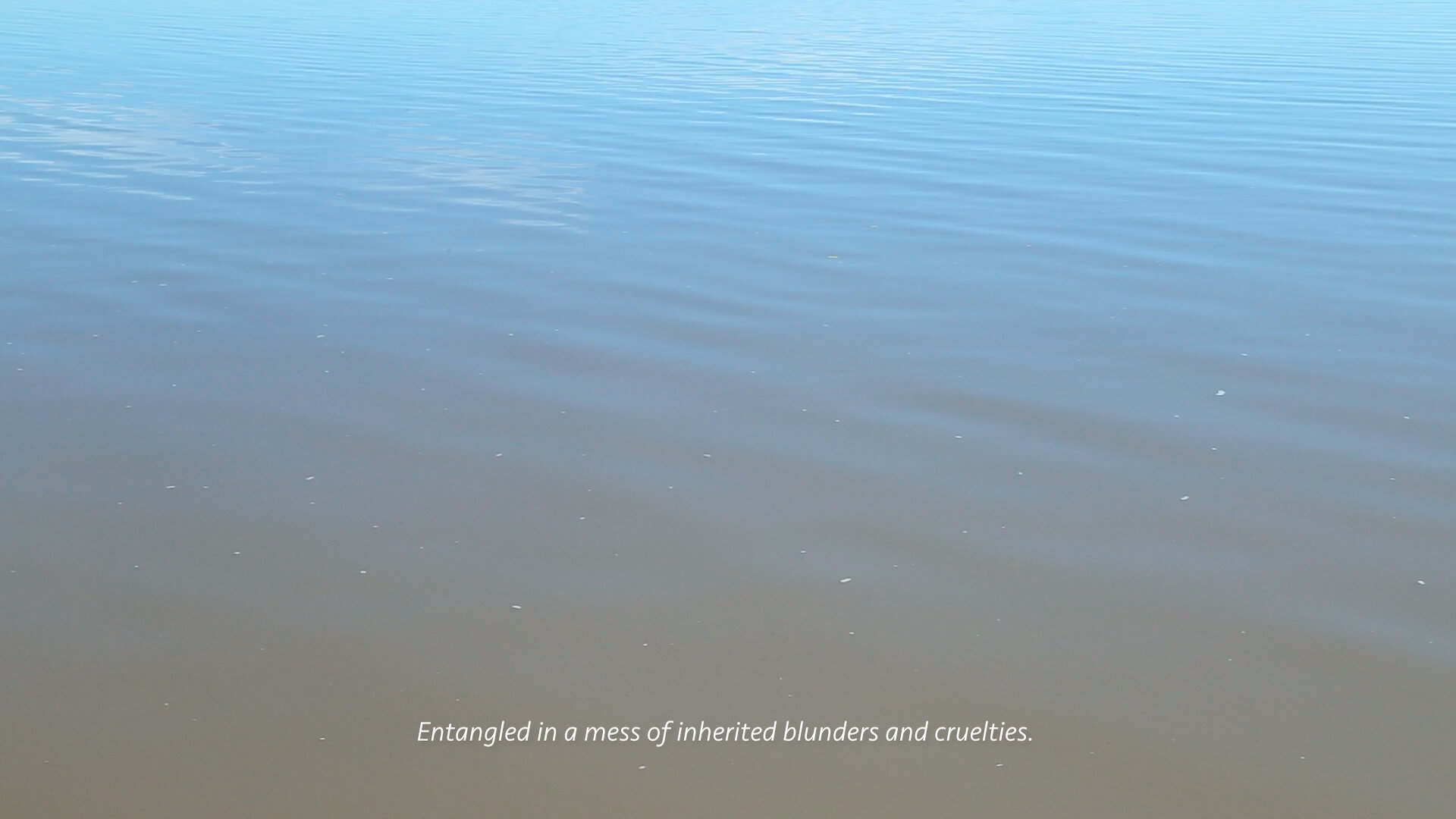
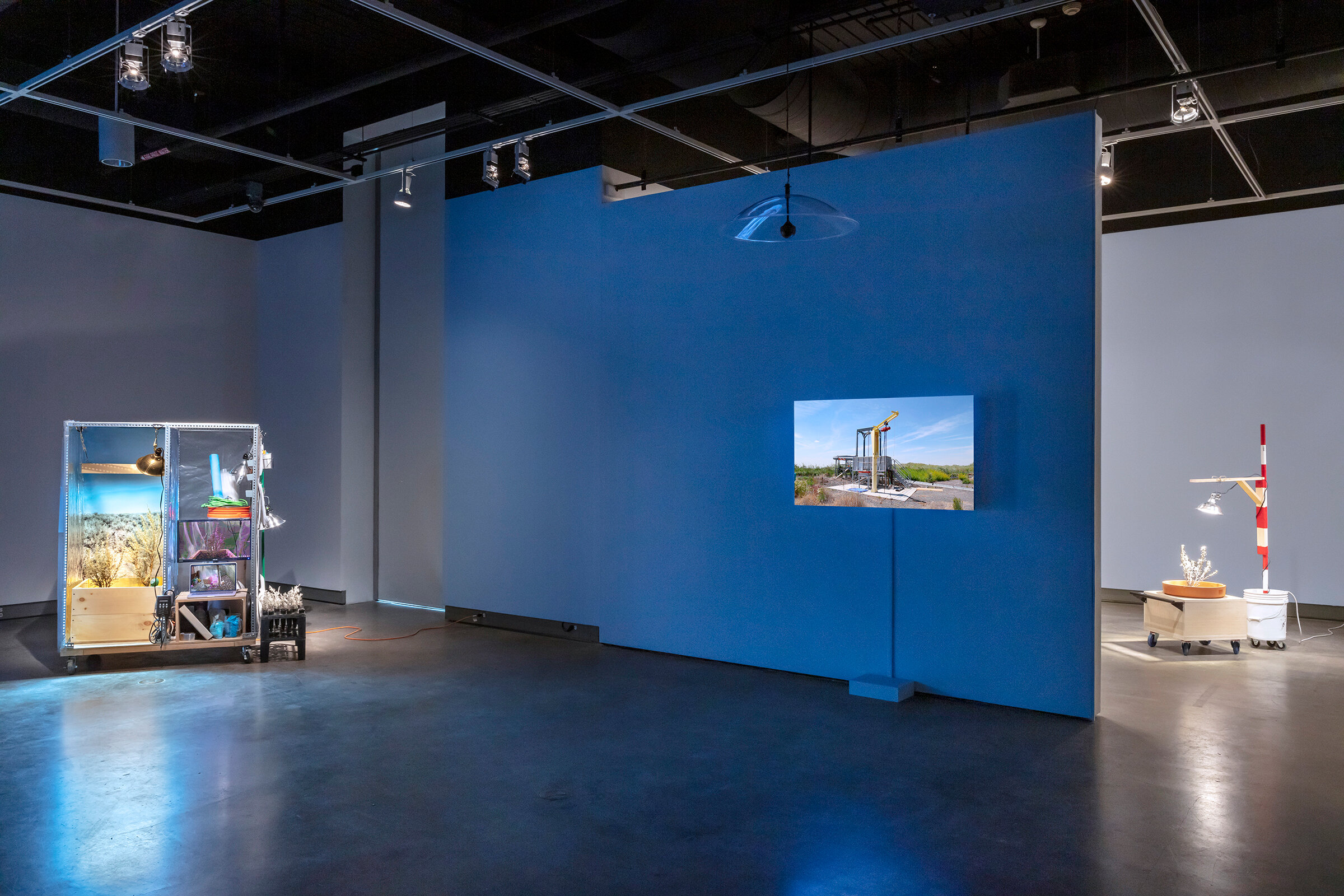
This video was created as part of the larger body of work, "Refuge". "Fieldwork Daydream" is exhibited in a larger multichannel video installation. 4:33 run-time, plays in continual loop. Video combines footage from field excursions with Refuge biologists. Staff has been entrenched in a struggle of their own making against invasive fish for the last 70 years. Today, many biologists are resigned to a career of human damage control. Some vilify the fish while others see the issue as partially a public relations problem; the defamation of carp, while rooted in the reality of ecological change, is deeply connected to a rhetoric of xenophobia and otherness. While carp are enjoyed as a food source throughout the world and were introduced to the US as such, they have been condemned by many as “trash fish” not worthy of upwardly mobile American palates. Vilification of the fish and the violent means to control them quickly mirrored the region’s history of assimilation and displacement.

Fieldwork Daydream, 2019


Two-channel video installation, 4:33 run-time, plays in continual loop.

Fieldwork Daydream was created as part of the larger body of work, Refuge. Video combines footage from field excursions with biologists attempting to eradicate “invasive” fish at Malheur Wildlife Refuge. For the last 70 years staff have been entrenched in a struggle of their own making against "invasive" fish. Some vilify the fish while others see the issue as deeply connected to a rhetoric of xenophobia and otherness. While carp are enjoyed as a food source throughout the world and were introduced to the US as such, they have been condemned by many as “trash fish” not worthy of upwardly mobile, white American palates. The carp are one component in a much larger regional history reflecting cultural understandings of what is deemed “natural” and valuable. It asks who and what become disposable, who is allowed to move freely, whose success is naturalized, and whose is seen as a threat.

✰ RELATED Works ✰